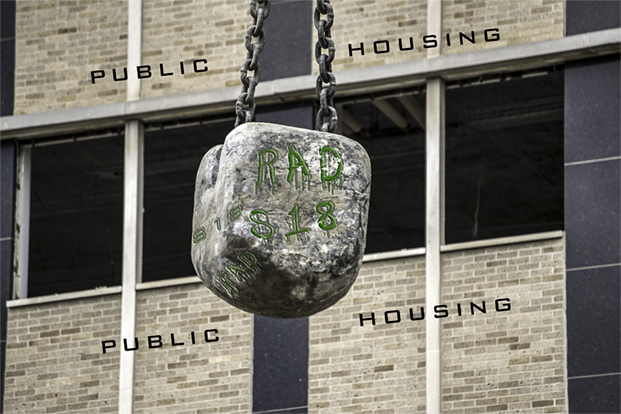
The mayor’s housing plan will fail because that’s all it can do. Failed ideas, weak programs and a total lack of understanding about affordable housing. And these are the strong points of the housing plan. It’s not entirely Mayor De Blasio’s fault but he is doing his best to make it worse.
Housing Problem: How we got here
Mayors long before De Blasio set into motion the problems in the affordable housing market. For example, the building of “the projects” came with good intentions. But time showed that warehousing people is not a solution.
Then there was the fallacy that building affordable homes for low and middle-income people was impossible. Then came the Nehemiah Homes.
The Nehemiah Homes
Proof positive that affordable homes were possible was the Nehemiah Homes project. It showed that people desired these over “the projects”. These homes were offered to those that met the income requirements. This meant that applicants could not exceed a certain income amount. Therefore, only low or middle-income families were eligible to participate in the project.
Success over adversity
Despite reams of red tape the Nehemiah Homes were built. However, the city led by then-Mayor Koch–having seen that affordable homes were possible–attempted to slow the process.
The city set out to build its version of affordable homes. But the city could not get out of its own way and its version of affordable homes paled in comparison.

Today, the city is still running interference. Nonetheless, Nehemiah continues to provide affordable homes. Such as the new buildings in Spring Creek/East New York.
One can only wonder why the mayor does not get fully behind this project.
Click here to read about the latest Nehemiah Houses in East New York
Projects: The Fatal Flaw
Back at the beginning of time, someone came up with the idea that warehousing people was good. Decades later that would prove to be an error. “Exploding neighborhoods” with high crime and poor living conditions in these projects would drive home the point.
Part of the mayor’s plan calls for warehousing of families. This will incorporate densely build developments. Past studies have shown that warehousing people is not the answer to providing housing. Neither is dense packing. But this has not stopped the mayor or developers.
I love the projects
As much as some will say they love the projects they can’t escape its fatal flaw. It only takes one family or member of a family to destroy a building, not just a floor. Destroying a housing development is a little harder. For that, you need at least two bad elements.
Warehousing people increases the chances of inviting such tenants into a community. Dense Packing people increases the chances of people annoying each other. When this happens, especially during the hot summer months, violent outbreaks happen.
So listen up Mr. Mayor. People need affordable housing and space to breathe. Dense pack projects are not the answer to affordable housing.
NYCHA Still Recovering
After the disastrous reign of Mr. John Rhea–head of NYCHA during the Bloomberg Administration–NYCHA is trying to get back on its feet. Complaints about living conditions are a staple in the news.
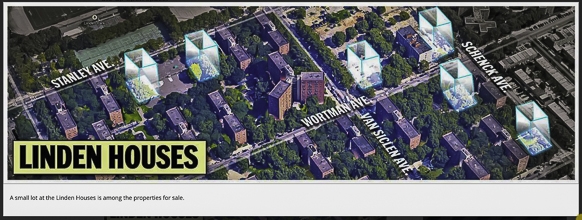
The abuses and poor leadership of the past head of NYCHA left the projects in desperately poor conditions. Its present leader strives to correct this condition. But years of bad decisions are hard to overcome. Yet Shola Olatoye and others are doing their best to bring the projects back up to snuff. Unfortunately, part of the fix is the selling off of NYCHA property.
Update: Ms. Olatoye would leave her post taking the blame for the lead crisis in NYCHA. To this day I find it hard to believe that a person with her intelligence would try to cover up something that is so easy to check. There’s more here than we know.
Fix What We Have
Instead of focusing on new developments the city needs to repair the existing ones. It needs to re-establish a functioning means of maintaining units. It is crazy that the repair parts for a development in Brooklyn sit in a location in another borough. The mayor and his advisors need to understand that people in the projects need action now. They could care less about a dense pack development that is years away.
The “Affordable” Definition
Middle and low-income people define “affordable” differently than the mayor’s office and developers. When every penny counts there is only one definition for “affordable”
Affordable: paying rent that allows for a quality of life after the rent is paid.
Developers Definition Of Affordable
Developers use a different premise for “affordable” called Return On Investment or ROI. They need a healthy Return On Investment to stay in business. For developers “affordable rent” is not be based on low or medium-income but on high-income. This is because the possibility of achieving the projected ROI is greater with high-income people.
Therefore, the developer’s definition of “affordable” applies only to those that can pay for it. To offset this the city offers the developer a tax abatement. This is the bribe excuse me, the incentive to build affordable housing. However, tax abatements have an expiration date. When this date comes around there is nothing to prevent the increase of rent.
In the end, the developer gets what he or she set out to get. By getting a tax abatement their ROI is achievable. And when the abatement expires the developer can increase the rent. Because we have rules that control the rate of rent increases this may take some time. But in the end, the rent will be at the market level. And once again we will be asking where are the affordable apartments?
The City’s Definition of Affordable
As for the Mayor’s office and its definition of affordable housing that remains a mystery. Whenever I hear what the city deems as affordable I shake my head in disbelief. The city should be leading the way in affordable rentals by charging less than the so-called market rate. Instead, we have housing development plans that ultimately will fail.
You just read: Why the Mayor’s Housing Plan Will Fail
Next: The Redefining of Affordable Rents for Low and Medium Income
Disclaimer: I am not a lawyer and nothing stated here is legal advice. This article applies to the five boroughs of New York. All information deemed accurate but not guaranteed. Always check the real estate laws in your part of the country.
Comments, Questions, Suggestions?
Was this article helpful? Did you learn anything new? I would like to hear your comments on this and any other article on this site. Take a moment, leave a comment or suggestion. Let’s start a conversation today.